In This Episode
- 01What Is a Right-Hand Person in Business?
- 02Why Every CEO Eventually Needs Support
- 03The Real Goal of Delegation Isn't Just Getting Tasks Off Your Plate
- 04Why CEOs Struggle to Let Go
- 05Your Team Can't Take Ownership Without Authority
- 06Clear Vision Makes Delegation Easier
- 07How Do You Build Trust With a Right-Hand Person?
- 081. Align on Core Values
- 092. Give People Permission to Make Decisions
- 103. Listen to Your Team
- 11Stop Being the Bottleneck in Your Own Business
- 12When to Hire a COO (or Any Right-Hand Person)
- 13The Best Leaders Eventually Pass the Baton
Key Takeaways
- You can't scale effectively if everything still depends on you. Sustainable business growth requires building a team that can make decisions and move the business forward without constant CEO involvement.
- A great right-hand person brings ownership and accountability. They don't just complete assigned tasks—they understand the vision, take responsibility for outcomes, and help keep the business running.
- Clarity comes before delegation. Your team can't successfully execute a vision that you haven't clearly communicated. As the CEO, you need to know where you're going before expecting someone else to help you get there.
- Delegation without authority creates another bottleneck. If you hire someone to lead but still require your approval for every decision, you haven't truly delegated.
- Trust is built over time. My six-year working relationship with Regine developed through communication, shared values, decision-making, collaboration, and gradually increasing responsibility.
- Your right-hand person doesn't have to think exactly like you. Strong leaders listen to their team and are willing to recognize when someone else may have a better idea or approach.
- The goal isn't simply to work less—it's to become less essential to daily operations. A business that can function without your constant involvement gives you more freedom to focus on strategy, growth, your purpose, and your life outside the business.
- Sometimes the CEO is the bottleneck. Hiring talented people won't create freedom if you continue micromanaging, stepping back into their responsibilities, or refusing to give up control.
Every CEO eventually faces the same challenge I did: your business can only grow so far when every decision, problem, and responsibility still depends on you. Knowing when to hire a COO—or any strong right-hand person—can help turn your vision into execution, lead your team, take ownership of operations, and give you the freedom to focus on the work only you can do. In this episode of The Lazy Entrepreneur Podcast, I sit down with Regine, COO of SmartVAs and my right-hand person of six years, to talk about how we built trust, delegated real authority, and created a business that no longer requires me to manage its day-to-day operations. Our experience offers an important lesson in business growth: hiring help isn't enough—you have to empower people to lead.
Bottom line: Building a business that supports your life requires more than hiring help. You need the right people, a clear vision, genuine trust, and the willingness to give others the authority to lead.
What Is a Right-Hand Person in Business?
A right-hand person is a trusted leader who understands the CEO's vision and has enough ownership, accountability, and authority to help turn that vision into reality.
That person doesn't necessarily need the title of COO.
They might be an operations manager, executive assistant, project manager, integrator, or another senior team member. What matters more than the title is the role they play in the business.
Regine describes her approach to being COO with two important words: ownership and accountability.
Although her responsibilities have changed over the years, she now oversees much of SmartVAs' recruitment, training, and operations. She also emphasized that operations isn't simply about keeping clients happy. The company needs happy, supported team members to deliver strong client experiences.
That mindset is what separates simply completing tasks from taking ownership.
A valuable right-hand person isn't constantly asking:
"What do you want me to do next?"
They understand where the company is going and can determine what needs to happen to help it get there.
Why Every CEO Eventually Needs Support
There is nothing inherently wrong with being a solopreneur.
But if your goal is significant business growth, there will eventually be a limit to what one person can accomplish.
You only have so many hours, so much attention, and so much decision-making capacity.
As Regine reminded me during our conversation, if you want your company to grow to another level, you eventually have to acknowledge that you cannot do everything yourself. But before hiring, you need clarity about what you actually need help with.
This is exactly where business coaching or business mentorship can help. In my own coaching work, I see founders who know they're overwhelmed but can't clearly identify which responsibilities they should keep, delegate, automate, or eliminate. It's the same root cause I unpack in why so many successful entrepreneurs still feel overwhelmed, even after they've technically "made it."
Effective business mentoring can help a CEO step outside the daily chaos and answer questions such as:
- Where is my time actually going?
- What work truly requires me?
- What am I still doing simply because I've always done it?
- Where am I creating a bottleneck?
- What type of person does the business need next?
- What would need to change for the company to operate without my constant involvement?
You shouldn't hire a high-level operations leader when what you really need is help with basic administrative work. Likewise, hiring an assistant won't solve a leadership gap if what you actually need is someone capable of owning operations.
Clarity should come before hiring.
The Real Goal of Delegation Isn't Just Getting Tasks Off Your Plate
Entrepreneurs often think about delegation in terms of tasks.
"What can I give someone else?"
That's a good starting point, but real delegation goes much further.
The bigger question is:
What can someone else eventually own?
Regine's journey demonstrates the difference.
When she first joined SmartVAs during the pandemic, she wasn't immediately handed a COO title and complete responsibility for the company. Her role evolved over time.
One responsibility became particularly important: discovery calls.
Taking those calls helped Regine understand what our clients needed and how we could support them. Eventually, I was able to remove myself from operations and put more of my attention into marketing and other areas of the business.
That's a powerful model for delegation.
- You don't necessarily hand someone the keys on day one.
- You give them responsibility.
- They demonstrate ownership.
- You build trust.
- Their authority expands.
And eventually, you're no longer delegating individual tasks. You're delegating outcomes.
Why CEOs Struggle to Let Go
Hiring someone is often easier than trusting them.
I've said this myself:
"I want someone to take this off my plate."
Then that person starts doing the work differently.
Suddenly, I'd step back in.
I'd change decisions. Redo work. Bypass the leader I'd hired and go straight to the team myself.
Eventually, everyone becomes confused about who's actually in charge.
It raises an uncomfortable but important question I had to ask myself:
Why are you stepping back in?
Sometimes it's because the employee genuinely needs more training or support.
But sometimes I simply had a hard time giving up control.
You might believe:
- "I can do it faster."
- "I'm better at this."
- "Nobody cares as much as I do."
Those statements may even be true in some situations.
But they miss the larger point.
If your goal is to build a company that doesn't depend entirely on you, someone else has to be allowed to develop the ability to lead.
As Regine and I talked about in the episode, there's little point in hiring someone to own an area of the business if you keep stepping in and doing that person's job.
Your Team Can't Take Ownership Without Authority
Responsibility without authority isn't true delegation.
Imagine telling someone:
"You're responsible for operations."
But every meaningful decision still requires your approval.
You've given them responsibility for the outcome without giving them the authority required to create that outcome.
That creates frustration for everyone.
One of the reasons I can enjoy greater freedom and flexibility today is that Regine makes many day-to-day decisions herself. When she does come to me, she almost always already has a proposed decision and is looking for confirmation rather than waiting for me to solve the problem.
That's what empowered leadership can look like.
Your right-hand person shouldn't need you to think for them.
They should understand the destination well enough to make decisions that move the company toward it.
Clear Vision Makes Delegation Easier
There's another side to this relationship.
A CEO can't expect someone to execute a vision that hasn't been clearly communicated.
Regine kept coming back to clarity in our conversation.
She understood the direction I wanted to take SmartVAs, and that made it easier for her to determine what needed to happen operationally.
The lesson for CEOs is simple:
If your vision is constantly changing, your team will struggle to execute it consistently.
You can't change direction every few weeks and then blame your team because you aren't seeing results.
Your team needs enough time and clarity to execute.
This is also where strong business mentorship helps. As a coach, I'm not there simply to tell you what to do. Effective business coaching can help you clarify what you're actually trying to build so you can communicate that direction to the people responsible for executing it.
How Do You Build Trust With a Right-Hand Person?
Trust isn't created through a job title.
It's built through repeated experiences.
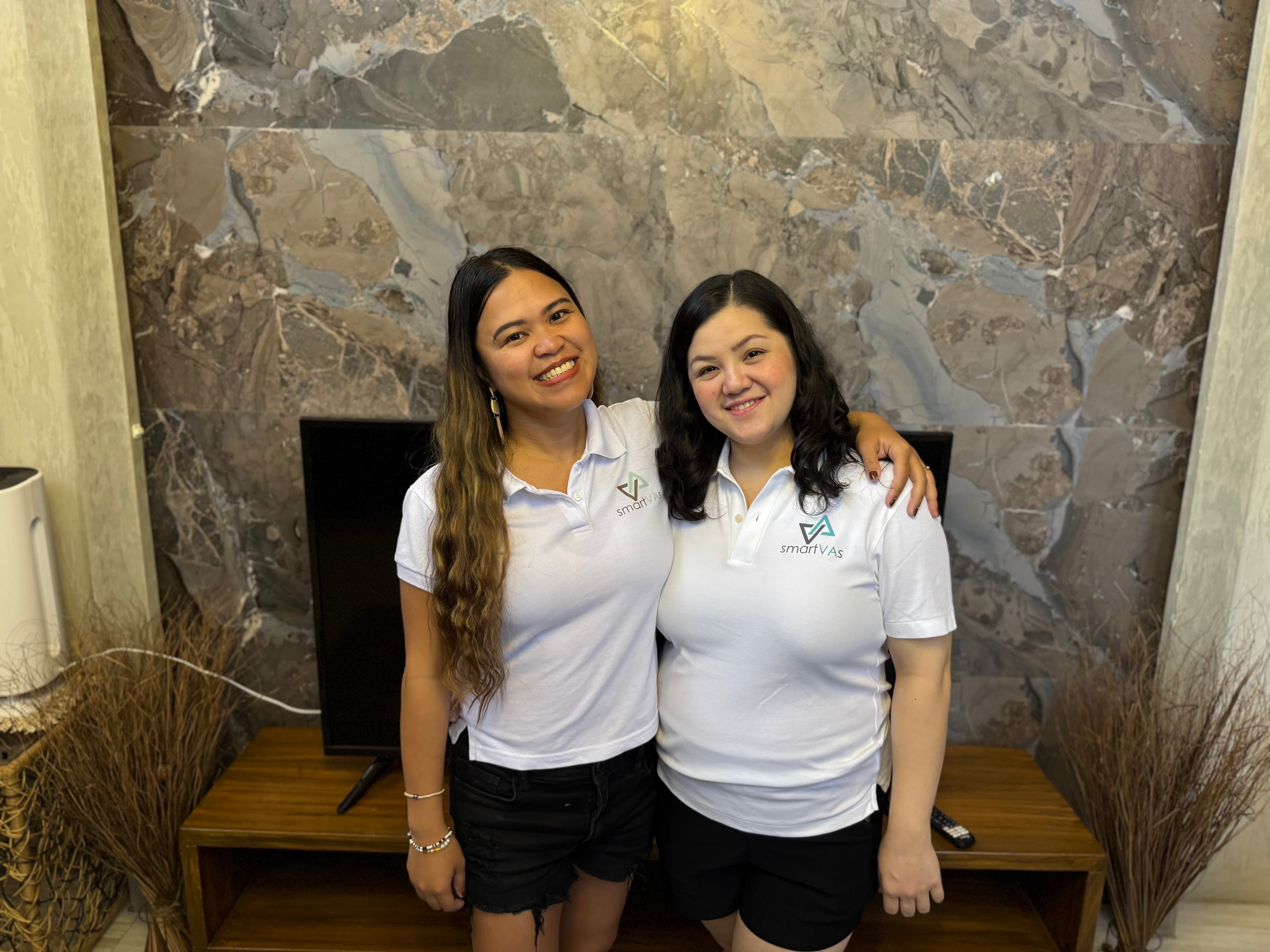
Regine and I have worked together for six years, and our relationship didn't develop overnight. We've disagreed. We've had different ideas about how something should be handled. But instead of treating every disagreement as conflict, we learned to collaborate.
A few principles stand out from our relationship.
1. Align on Core Values
Skills can be developed.
Values are harder to manufacture.
Regine points to alignment with SmartVAs' core values and mission—including its desire to provide opportunities for Filipino freelancers—as an important source of her motivation and commitment.
A right-hand person needs to care about more than completing today's task.
They need a reason to care about where the business is going.
They also don't need to mirror your skill set. Some of the strongest teams are built by hiring for your weaknesses rather than cloning your own strengths.
2. Give People Permission to Make Decisions
People don't become confident decision-makers by never being allowed to decide anything.
I make a point of telling my team that mistakes can happen.
That doesn't mean standards disappear. It means leaders need enough psychological room to make decisions, learn, and improve.
If every mistake causes you to reclaim control, your team learns a dangerous lesson:
Don't decide. Wait for the boss.
And now you're the bottleneck again.
3. Listen to Your Team
One of Regine's biggest lessons from working with me is the importance of listening.
Hiring experienced people and then refusing to consider their ideas defeats part of the purpose of building a team.
Listening doesn't mean you have to agree with every recommendation.
It means being willing to hear it.
Your employees may see problems you can't see because they're closer to the work, the clients, or the systems.
Strong leadership requires enough confidence to say:
"Your idea may be better than mine."
Stop Being the Bottleneck in Your Own Business
Founder dependency can quietly become one of the biggest obstacles to business growth.
- If everything needs your approval, you're the bottleneck.
- If every client issue comes to you, you're the bottleneck.
- If nobody can make a decision until you're available, you're the bottleneck.
- And if you hire leaders but continue doing their jobs, you're still the bottleneck.
I wrote a related piece on ten signs you've become the bottleneck in your business, and it pairs well with everything Regine and I unpacked in this episode—if any part of that list above hit close to home, I'd start there next.
This is one reason the lazy entrepreneur philosophy isn't really about being lazy.
It's about becoming more intentional with your time.
Systems, automation, and delegation should reduce unnecessary founder dependency so you can spend more time on high-value work—and have a life outside the business.
That's also where business strategy connects with life coaching and, more broadly, conversations around well-being and mental health coaching. Business success means very little if you've built a company that leaves no room for rest, family, relationships, or the rest of your life.
Your business should support the life you're trying to build—not consume it.
When to Hire a COO (or Any Right-Hand Person)
You may be ready for higher-level support when your company's growth is increasingly limited by your personal capacity.
Common signs include:
- Your team constantly waits for you to make decisions.
- You're spending most of your time managing instead of growing the business.
- You have capable employees but still can't step away.
- Operations fall apart whenever you're unavailable.
- You're the default person for every problem.
- You know what needs to happen but don't have the capacity to execute it.
- You want more freedom but can't imagine taking extended time away.
But don't start by searching for a COO.
Start with the outcome.
What do you need this person to own?
Then determine the role, skills, experience, and leadership qualities required to produce that outcome.
The Best Leaders Eventually Pass the Baton
One of the most powerful ideas from my conversation with Regine comes near the end.
Leadership isn't only about what you can accomplish.
It's also about who you can develop.
There comes a point when the next stage of your leadership may not involve doing more yourself. It may involve nurturing someone else until they're capable of carrying responsibilities you once thought only you could handle.
That's a different definition of success.
Instead of asking:
"How much can I accomplish?"
Ask:
"What can this business accomplish without depending on me?"
Maybe your next level of business growth doesn't require more hours.
Maybe it requires more trust.
Maybe you don't need to become better at doing everything.
Maybe you need to become better at developing people who can do some things better than you.
That's not losing control.
That's building leadership capacity.
And for the lazy entrepreneur who wants sustainable growth, stronger systems, and more freedom, that may be one of the smartest business moves you can make.
If burnout is part of what's driving you to search for a right-hand person, I'd also point you to my conversation about founder burnout—it's a good companion read to this one. And if you're new here, you can learn more about my story and the work I do on my homepage.
If you're realizing you need help figuring out what to delegate, who to trust, or how to finally build a leadership team, let's talk. I'd love to hear where you're at and help you think through the next step.
Frequently Asked Questions
When should you hire a COO?+
Consider hiring a COO or another right-hand person when your business's growth is being limited by your personal capacity, your team constantly waits for your decisions, or you cannot step away without operations being disrupted. Before you hire, get clear on what you actually need that person to own—the responsibilities should determine the role, not the other way around.
What is a right-hand person in business?+
A right-hand person is a trusted team member who helps a founder or CEO turn their vision into execution. In my business, that's Regine—but depending on your company, this person could be a COO, operations manager, executive assistant, project manager, integrator, or another senior leader. The important qualities are ownership, accountability, alignment, and the ability to make decisions within their area of responsibility.
Why does a CEO need a right-hand person?+
As a company grows, having every decision and responsibility depend on you can create a bottleneck—I know because I lived it. A strong right-hand person can take ownership of important areas of the business, lead team members, solve problems, and help execute your vision. That's what gave me the capacity to focus on strategy, growth, relationships, and life outside the business.
What qualities should I look for in a right-hand person?+
Look for someone who demonstrates ownership, accountability, sound judgment, alignment with your core values, and genuine care for the work. The specific technical skills will depend on what you need that person to manage. In Regine, I found someone comfortable making decisions rather than constantly waiting for instructions—that's what I'd encourage you to look for too.
How can a CEO learn to let go of control?+
Start by delegating clearly defined responsibilities and agreeing on the outcomes, boundaries, and decisions the other person can own. Then resist the temptation to step back in simply because they approach the work differently—I had to learn this myself. Trust develops gradually. Give people opportunities to make decisions, evaluate the results, provide feedback, and expand their authority as they demonstrate capability.
What's the difference between delegation and giving someone ownership?+
Delegation often means assigning someone a task. Ownership means giving them responsibility for an outcome and enough authority to make decisions necessary to achieve it. If someone is responsible for a result but must ask you for approval at every step, you're still likely the bottleneck—I learned that the hard way before Regine and I built the working relationship we have now.
Can business coaching help me build a team and delegate?+
Yes—this is exactly the kind of work I do with clients. Business coaching or business mentorship can help you clarify your goals, identify where you're creating bottlenecks, determine what responsibilities should be delegated, and define the type of support your business needs. The goal isn't simply to hire more people. It's to build the right structure around the business you want—and the life you want that business to support.